TheQuran.com
Differences Analysis · argument tier

Questions raised about the text

Linguistic, historical, scientific and internal-consistency questions, verse by verse. Each item is an argument, with the sources it cites and a place for the responses.

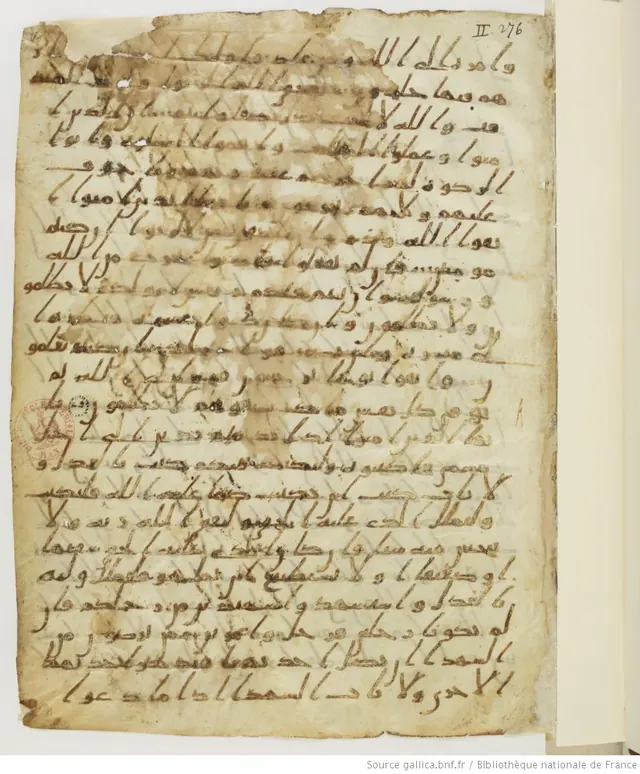
Codex Parisino-petropolitanus, c. late 7th–early 8th century
Codex Parisino-petropolitanus, c. late 7th–early 8th century · credit
items
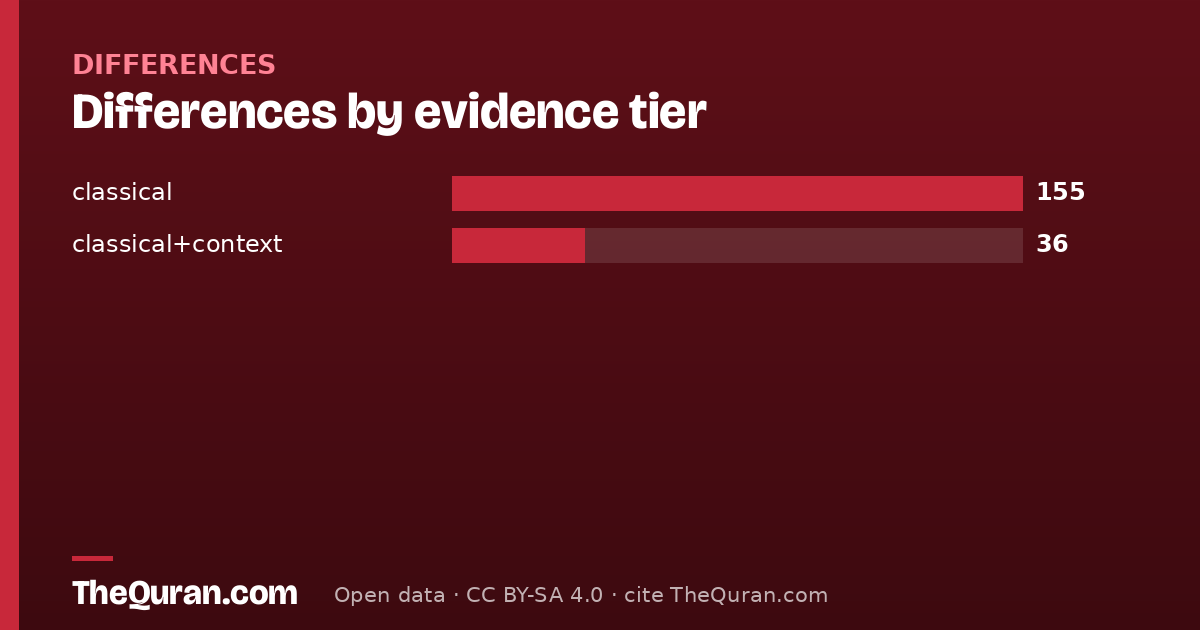
214201 original · 13 proposed
verses covered
3616% of 6,236
suras
43of 114
cite a source
100%0 cite none
Browse by category

The old site's categories

Each item is filed under one category from the old site's list (its most specific one); the other categories it carries still show as tags.

All category tags

What the questions are about

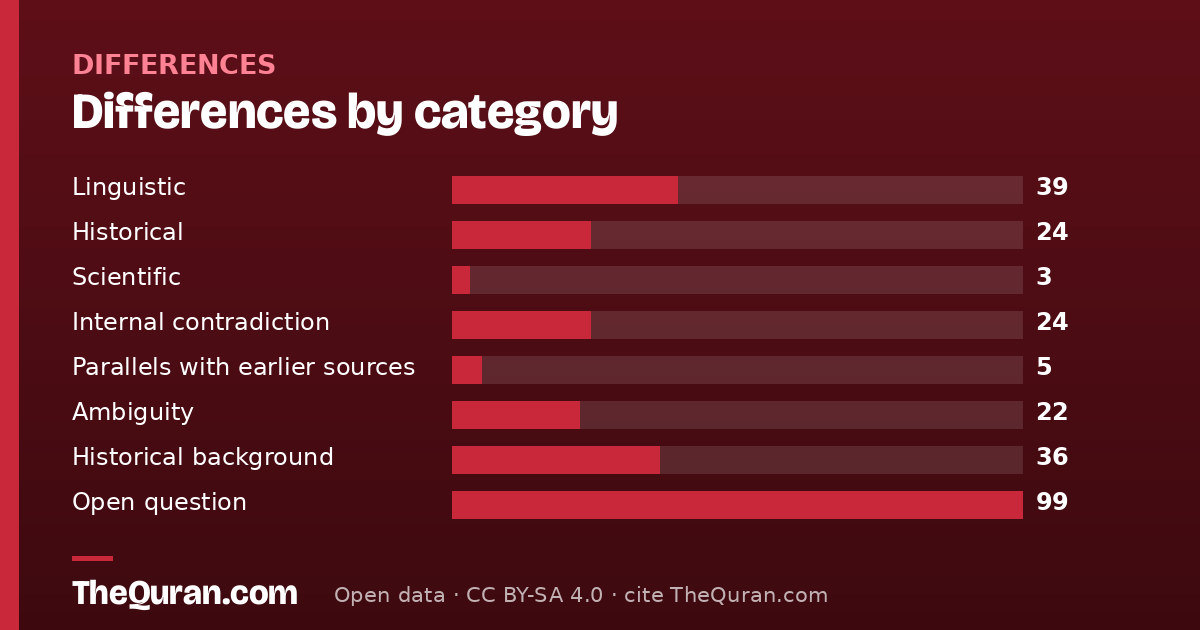
  1. Open question · old label “Question” 105 49%
  2. Linguistic 42 20%
  3. Historical background · old label “Historical Background” 39 18%
  4. Historical 31 14%
  5. Internal contradiction · old label “Quranic Contradiction” 29 14%
  6. Ambiguity 25 12%
  7. Parallels with earlier sources · old label “Copied from other sources” 7 3%
  8. Scientific 4 2%
  9. Numerical 2 1%
  10. Geographical 1 0%

original site proposed · an item can carry more than one category, so the bars sum to more than 214.

Across the Qur'an

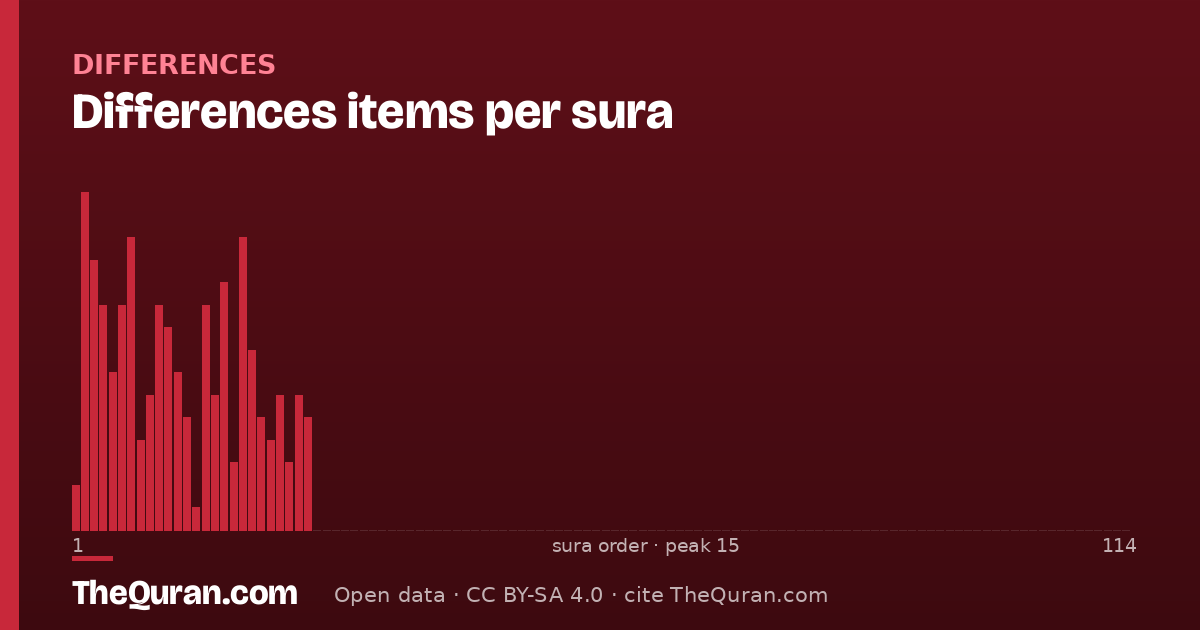
Items per sura

1114sura order · darker = more items · none = blank
7 items · page 1 of 1 Clear
  1. 1:15 verses Parallels with earlier sources Historical backgroundOpen question Argument In the Islāmic books that recount the history of the codices, records show that Ibn Mas‘ūd refused to include Q 1, Q 113, and Q 114 in his codex of the Qur’ān, because he believed that these sūras were never intended to be a part…
  2. 1:62 verses Parallels with earlier sources AmbiguityHistorical background Argument During prayer, Muslims ask Allah to guide them to “the right path.” In Arabic, this phrase implies that the petitioner is lost and cannot find the right path. Therefore, Allah is asked to guide the way to the correct path. Accord…
  3. 7:148 Parallels with earlier sources Historical Argument This verse recounts the story of a calf idol being made from the golden ornaments. The verse refers to the calf as a body “with a khuwār [mooing sound]”. In another reading ascribed to ‘Alī Ibn Abī Talib, the verse reads “he has …
  4. 26:152 verses Parallels with earlier sources Argument Allah addresses Moses and Aaron in this verse. There are two problems in the Arabic grammar of the verse. First, the word ma‘kum is translated “with you” by Palmer. To be grammatically correct in the Arabic dual form (al-muthanna…
  5. 26:83 Parallels with earlier sources Argument Here, Abraham asks God to give him judgment. The meaning of “judgment” is not clear in the verse. Islamic commentaries suggest three interpretations: (1) “wisdom,” (2) “to judge among people fairly,” or (3) “the prophethood” beca…
  6. 26:195 Parallels with earlier sources Argument Allah declares through this verse that his revelations came down “in plain Arabic language.” Other translations include “in the perspicuous Arabic tongue” (Yusuf Ali trans.), “in a perfect Arabic tongue” (Khalifa trans.), and “in…
  7. 28:92 verses Parallels with earlier sources Historical Argument added in review Pharaoh’s wife, or Pharaoh’s daughter? 28:9: “Pharaoh’s wife” finds the infant Moses and asks to keep him. 66:11 also praises Pharaoh’s wife. In Exodus 2:5–10 it is Pharaoh’s daughter who finds Moses in the Nile and raises him as her son.