TheQuran.com
Differences Analysis · argument tier

Questions raised about the text

Linguistic, historical, scientific and internal-consistency questions, verse by verse. Each item is an argument, with the sources it cites and a place for the responses.

Codex Parisino-petropolitanus, c. late 7th–early 8th century
Codex Parisino-petropolitanus, c. late 7th–early 8th century · credit
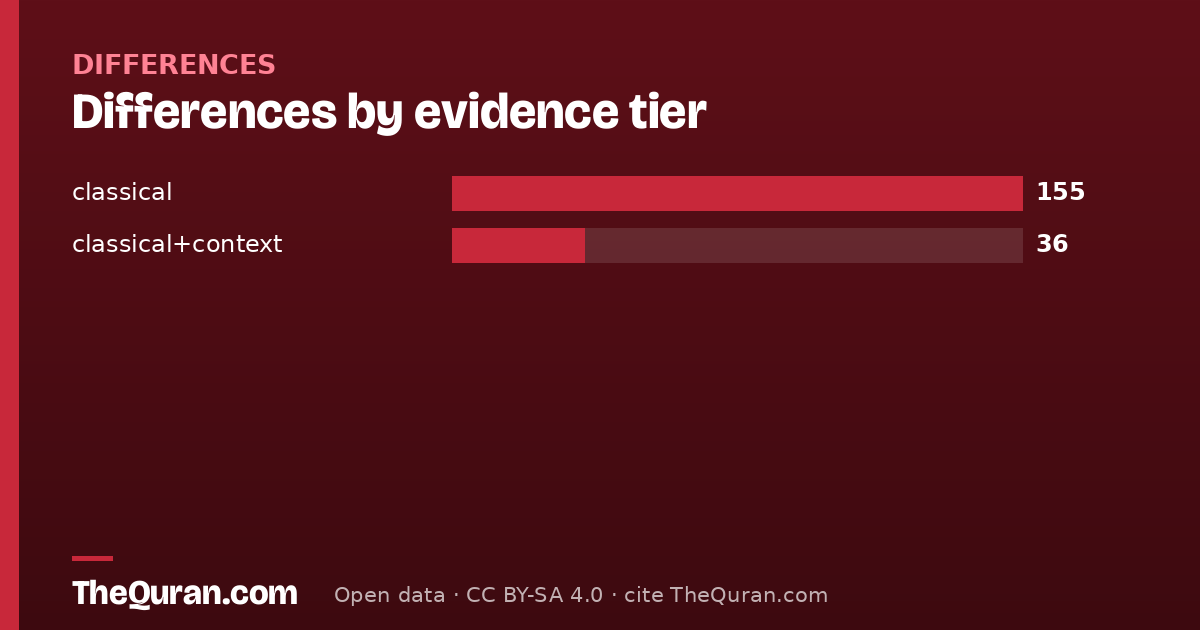
items
191191 original · 0 proposed
verses covered
3035% of 6,236
suras
26of 114
cite a source
100%0 cite none
Browse by category

The old site's categories

Each item is filed under one category from the old site's list (its most specific one); the other categories it carries still show as tags.

All category tags

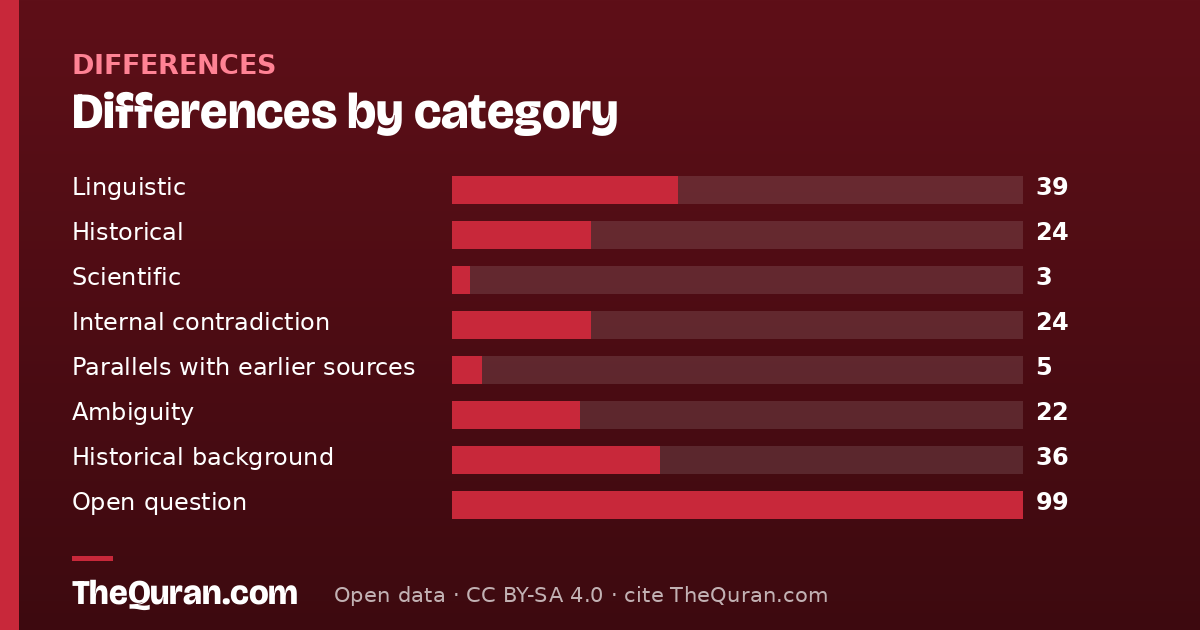
What the questions are about

  1. Open question · old label “Question” 99 52%
  2. Linguistic 39 20%
  3. Historical background · old label “Historical Background” 36 19%
  4. Historical 24 13%
  5. Internal contradiction · old label “Quranic Contradiction” 24 13%
  6. Ambiguity 22 12%
  7. Parallels with earlier sources · old label “Copied from other sources” 5 3%
  8. Scientific 3 2%
  9. Geographical 0 0%
  10. Numerical 0 0%

original site proposed · an item can carry more than one category, so the bars sum to more than 191.

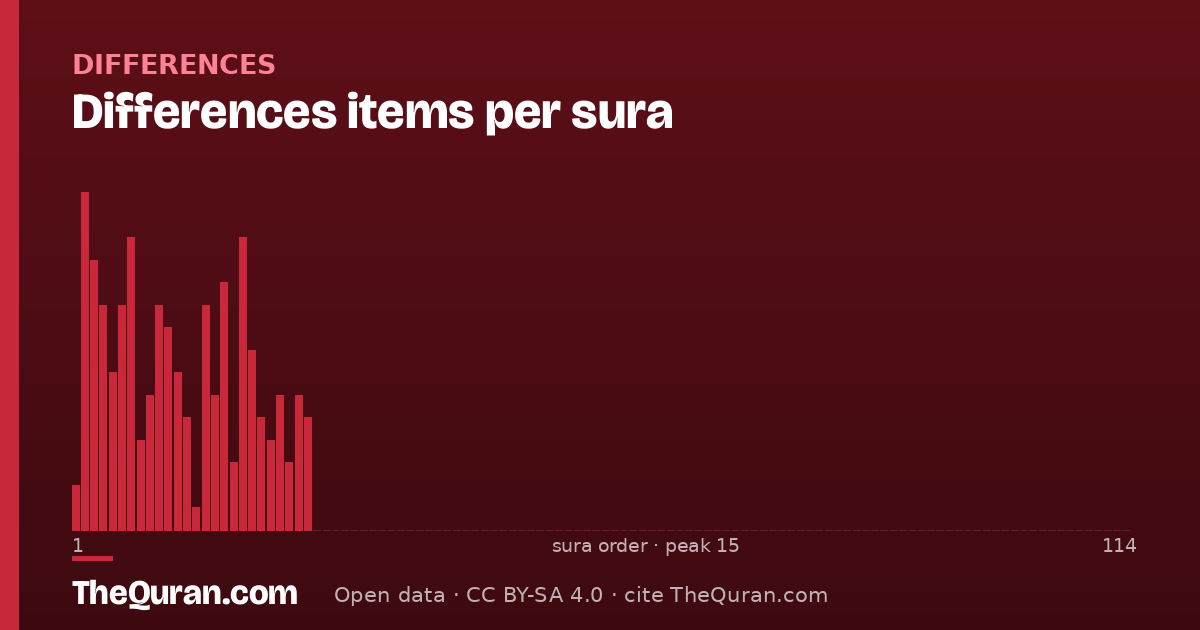
Across the Qur'an

Items per sura

1114sura order · darker = more items · none = blank
8 items · page 1 of 1 Clear
  1. 11:83 Linguistic Argument The word ba‘īdin (“far”) in the verse is masculine. It should have been feminine as it is the adjective of hiya (“she”), translated as “these” in the verse. Proper grammar was sacrificed to keep the rhyme (al-fāṣila) of the verse.
  2. 12:2 Linguistic Open question Argument According to the verse, God announces, “Surely, we have revealed it-- an Arabic Quran-- that you may understand.” The Qur’an repeatedly declares its Arabic calling and outstanding eloquence. Upon reading such verses, one cannot h…
  3. 15:9 Linguistic Argument Allah states in this verse, “Verily, we have sent down the Reminder, and, verily, we will guard it.” Al-Ţabarī explains that this verse means that Allah “verily will guard the Qur’ān from any false addition of what is not part of…
  4. 16:100 Linguistic Argument The problem with this verse is not as clearly seen as it is in other translations: “His authority is only over those who befriend him and those who associate others with Him” (Shakir trans.; emphasis added). To whom does the seco…
  5. 19:18 Linguistic Argument When the angel appears to Mary, she says, “Verily, I take refuge in the Merciful One from thee, if thou art pious.” There is a contradiction in her words. One does not seek refuge in God from a pious person. Qur’ānic critics have…
  6. 23:17 Linguistic Argument Commentators interpret the word Tar'ek ("Roads, Tracts or Paths'') as "Heavens". Such interpretation is supported as follows: Heavens is Tra'ek in the sense of "layers of clothing" Heavens is Tra'ek in the sense of "trajectories …
  7. 23:99 Linguistic Argument The text in this verse presents two issues: Grammatical inconsistencies The verse begins with a singular address to Allah (“he says, ‘My Lord!’”) but changes to a plural address, arji‘ūni (“send ye me back”). The word arji‘ūni is…
  8. 25:43 Linguistic Argument The obvious intent of this verse is to criticize infidels for making their passions their god. However, the actual wording in the Arabic language states instead that infidels should be denounced for their passion for their god. F…