TheQuran.com
A primary-source examination of the Qur'an. The Arabic first, every figure cited, and where the authorities disagree, each one shown side by side.
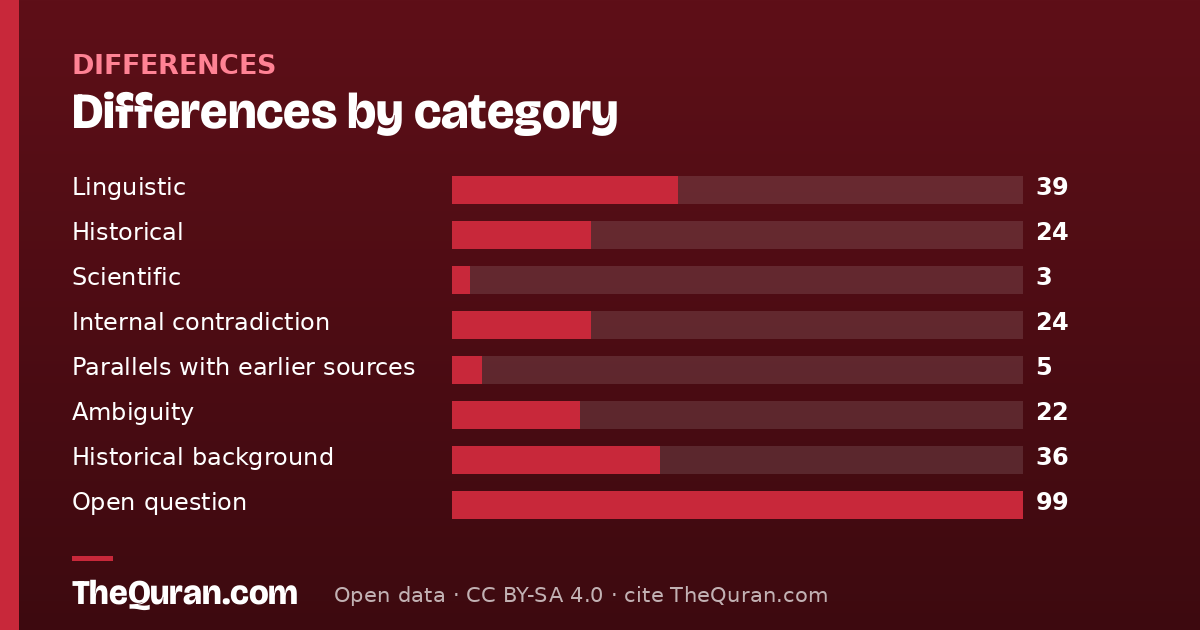
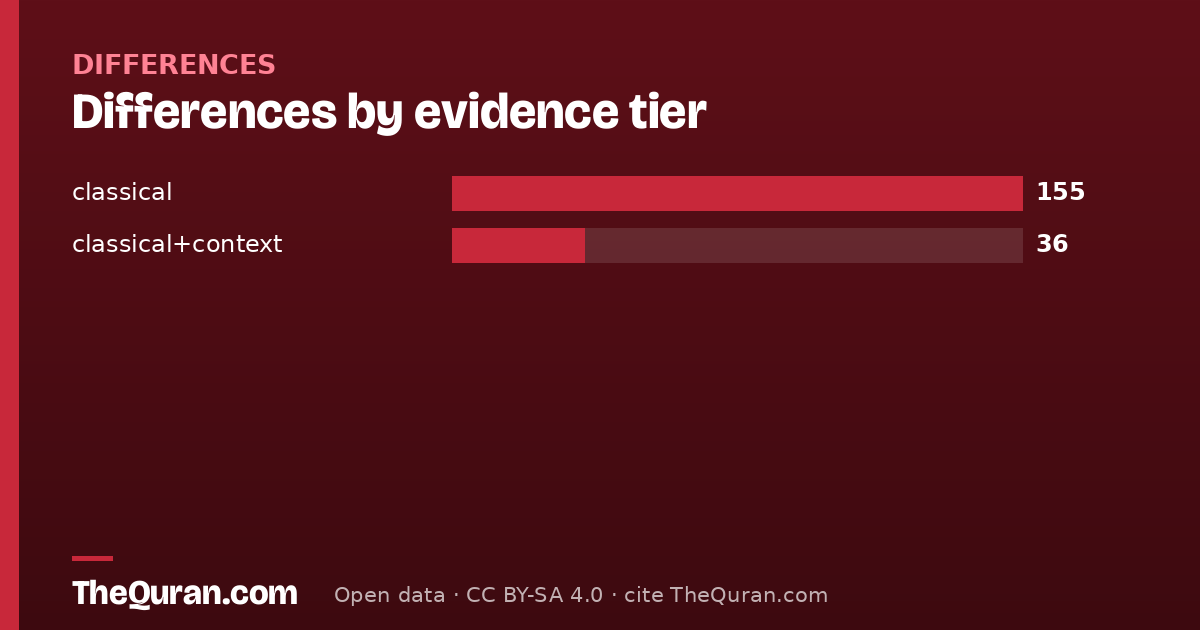
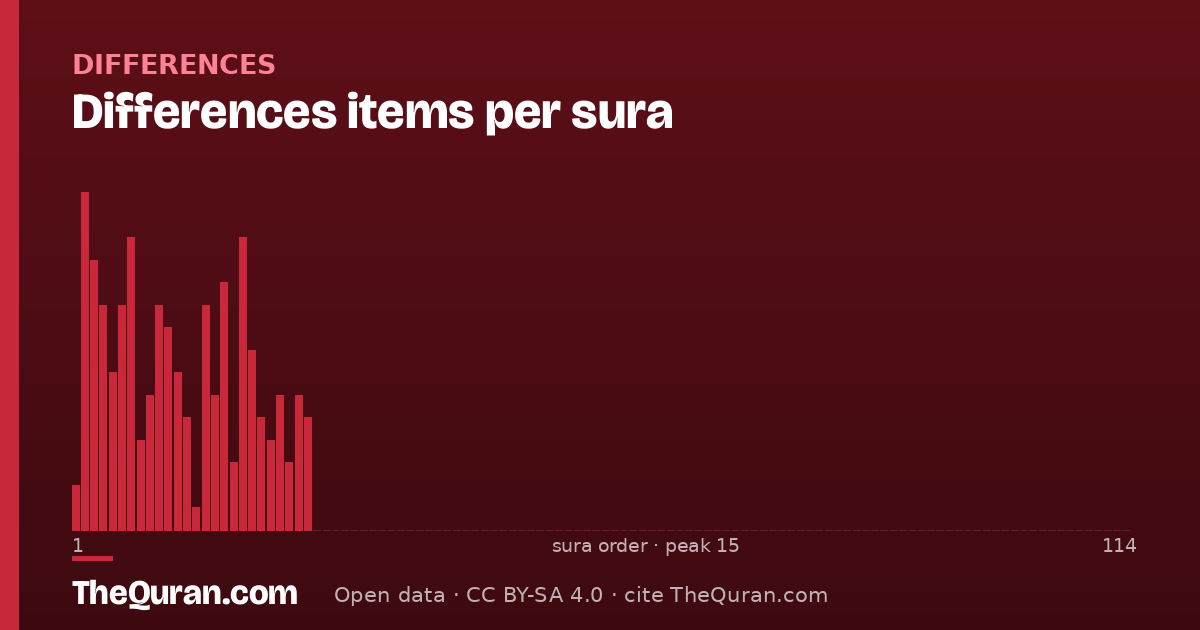
Differences — imported from the original thequran.com (tables errors, erroradmincomments, errorreferences, errortypes; last edited 2020–21). Text reduced to plain paragraphs. Items the old site repeated word for word across a passage are merged into one item per passage; their old ids redirect, and the merge is recorded in data/differences-merge-map.json. Original sources are shown as their authors wrote them; sources added in review are listed separately, each checked online. Items with no verifiable source are held back. Proposed items are marked. Audit flags do not judge the argument.
Numbering — every reference on this site is Ḥafṣ-relative. Where another transmission numbers a
verse differently, both numbers are shown.
Open data — our research data (Differences, abrogation, readings, repetitions, figures) is
CC BY-SA 4.0:
download, credit TheQuran.com, share alike. Reading checks use
Corpus Coranicum (CC BY-SA 4.0). Design, code and articles © TheQuran.com, all rights reserved.
Qur'an text — Ḥafṣ Uthmani text from the
Tanzil Project (CC BY 3.0), shown unaltered. Font: Amiri Quran (SIL OFL 1.1).