TheQuran.com
Differences Analysis · argument tier

Questions raised about the text

Linguistic, historical, scientific and internal-consistency questions, verse by verse. Each item is an argument, with the sources it cites and a place for the responses.

Codex Parisino-petropolitanus, c. late 7th–early 8th century
Codex Parisino-petropolitanus, c. late 7th–early 8th century · credit
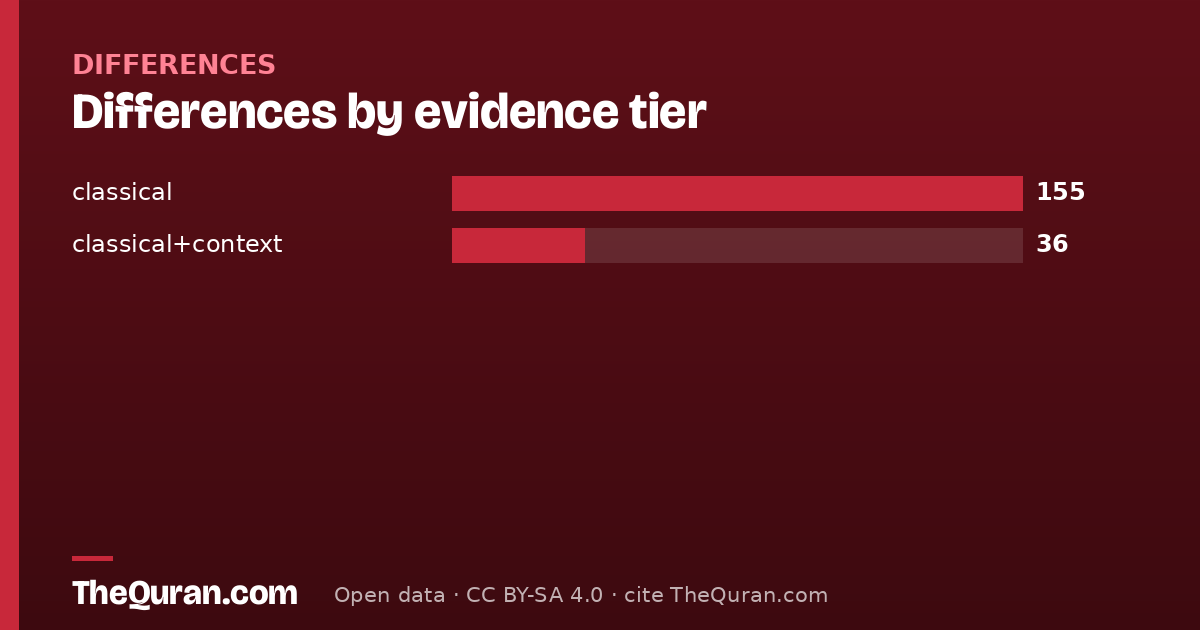
items
191191 original · 0 proposed
verses covered
3035% of 6,236
suras
26of 114
cite a source
100%0 cite none
Browse by category

The old site's categories

Each item is filed under one category from the old site's list (its most specific one); the other categories it carries still show as tags.

All category tags

What the questions are about

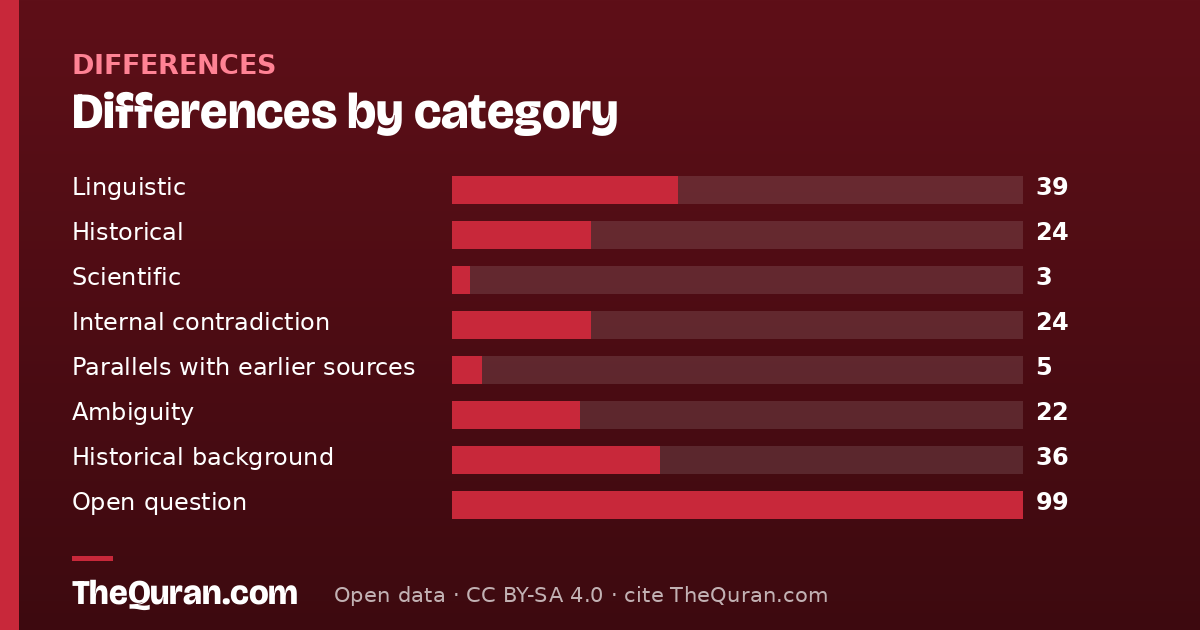
  1. Open question · old label “Question” 99 52%
  2. Linguistic 39 20%
  3. Historical background · old label “Historical Background” 36 19%
  4. Historical 24 13%
  5. Internal contradiction · old label “Quranic Contradiction” 24 13%
  6. Ambiguity 22 12%
  7. Parallels with earlier sources · old label “Copied from other sources” 5 3%
  8. Scientific 3 2%
  9. Geographical 0 0%
  10. Numerical 0 0%

original site proposed · an item can carry more than one category, so the bars sum to more than 191.

Across the Qur'an

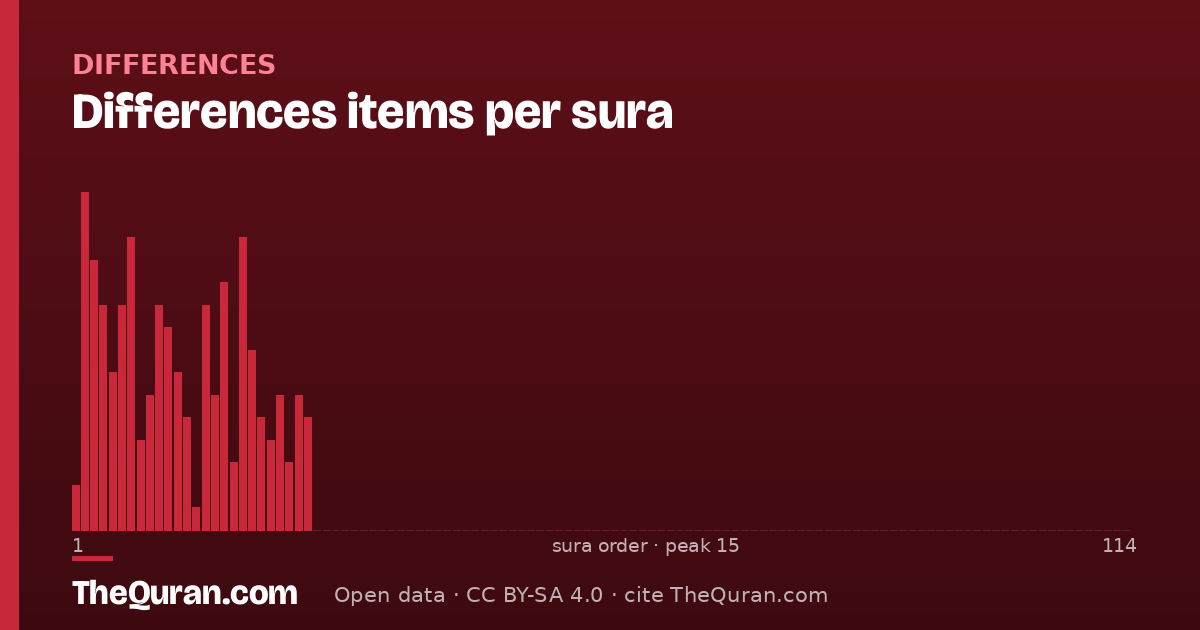
Items per sura

1114sura order · darker = more items · none = blank
6 items · page 1 of 1 Clear
  1. 5:69 Linguistic Argument In the current Arabic Qur’ān, the word Sabaeans is actually written in its plural nominative form, Sābi’ūn, which should have been in the objective (accusative) form Sābi’īn, as it is written in other verses: “...those who believ…
  2. 11:83 Linguistic Argument The word ba‘īdin (“far”) in the verse is masculine. It should have been feminine as it is the adjective of hiya (“she”), translated as “these” in the verse. Proper grammar was sacrificed to keep the rhyme (al-fāṣila) of the verse.
  3. 15:9 Linguistic Argument Allah states in this verse, “Verily, we have sent down the Reminder, and, verily, we will guard it.” Al-Ţabarī explains that this verse means that Allah “verily will guard the Qur’ān from any false addition of what is not part of…
  4. 19:61 Linguistic Argument The Arabic verb translated by Palmer as “comes to pass” is ma’tiyan. In Arabic, the verb is actually in the passive voice—“made to pass”—instead of the active. The intended meaning requires the active voice as Palmer correctly tr…
  5. 20:67 Linguistic Argument The name Moses appears at the end of the verse in Arabic to keep the rhyme. Grammatically, it should have come after the verb in keeping with the more typical Arabic sentence structure, where the subject comes after the verb.
  6. 20:70 Linguistic Argument The name Aaron comes before Moses, when he is a follower of Moses. The reason “Aaron” is mentioned first is to keep the rhyme. Moses should have been mentioned first because of his centrality to the verse and the narrative here.