TheQuran.com
Differences Analysis · argument tier

Questions raised about the text

Linguistic, historical, scientific and internal-consistency questions, verse by verse. Each item is an argument, with the sources it cites and a place for the responses.

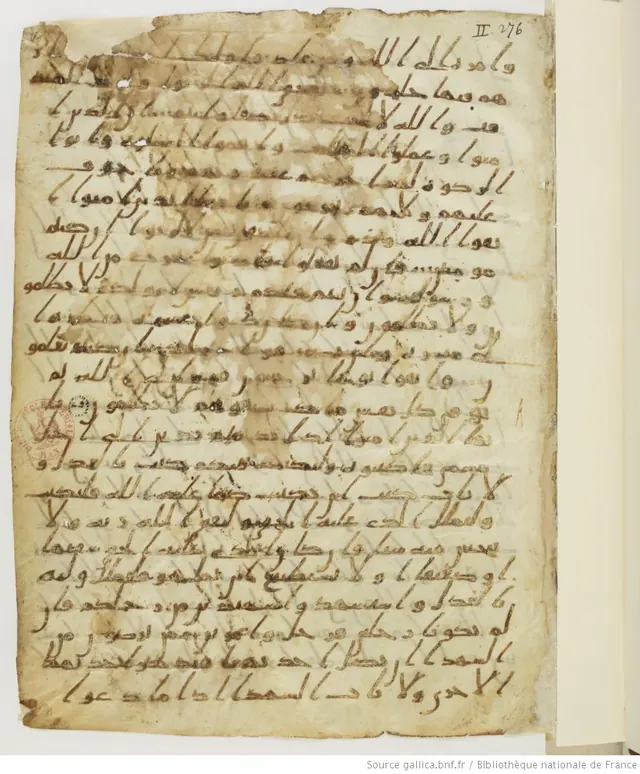
Codex Parisino-petropolitanus, c. late 7th–early 8th century
Codex Parisino-petropolitanus, c. late 7th–early 8th century · credit
items
214201 original · 13 proposed
verses covered
3616% of 6,236
suras
43of 114
cite a source
100%0 cite none
Browse by category

The old site's categories

Each item is filed under one category from the old site's list (its most specific one); the other categories it carries still show as tags.

All category tags

What the questions are about

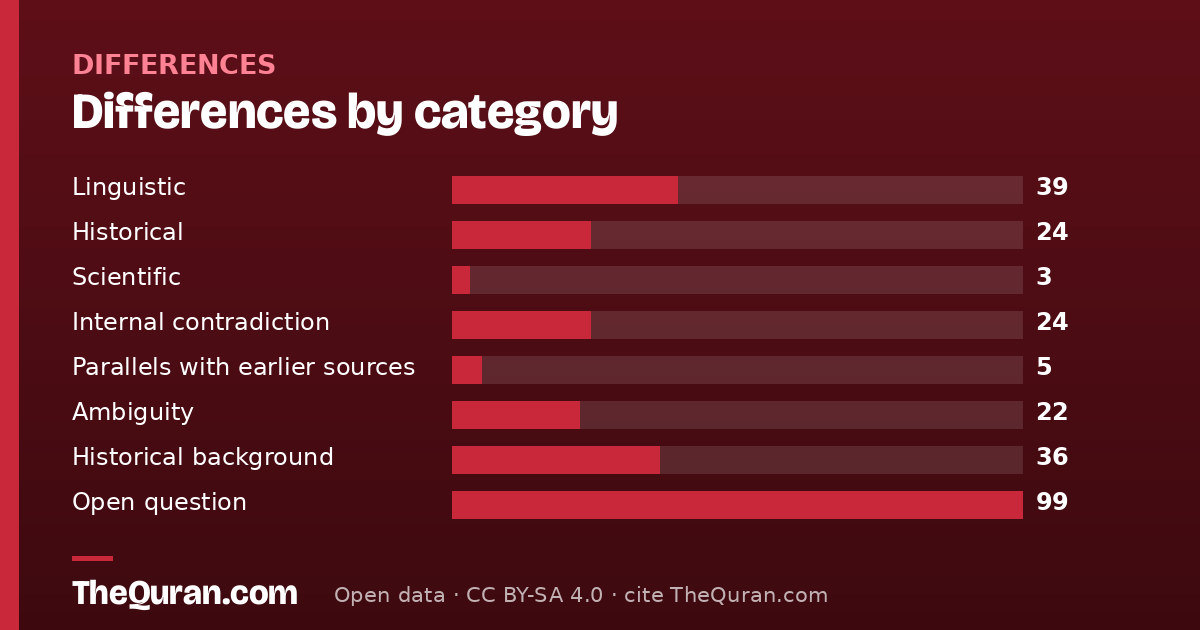
  1. Open question · old label “Question” 105 49%
  2. Linguistic 42 20%
  3. Historical background · old label “Historical Background” 39 18%
  4. Historical 31 14%
  5. Internal contradiction · old label “Quranic Contradiction” 29 14%
  6. Ambiguity 25 12%
  7. Parallels with earlier sources · old label “Copied from other sources” 7 3%
  8. Scientific 4 2%
  9. Numerical 2 1%
  10. Geographical 1 0%

original site proposed · an item can carry more than one category, so the bars sum to more than 214.

Across the Qur'an

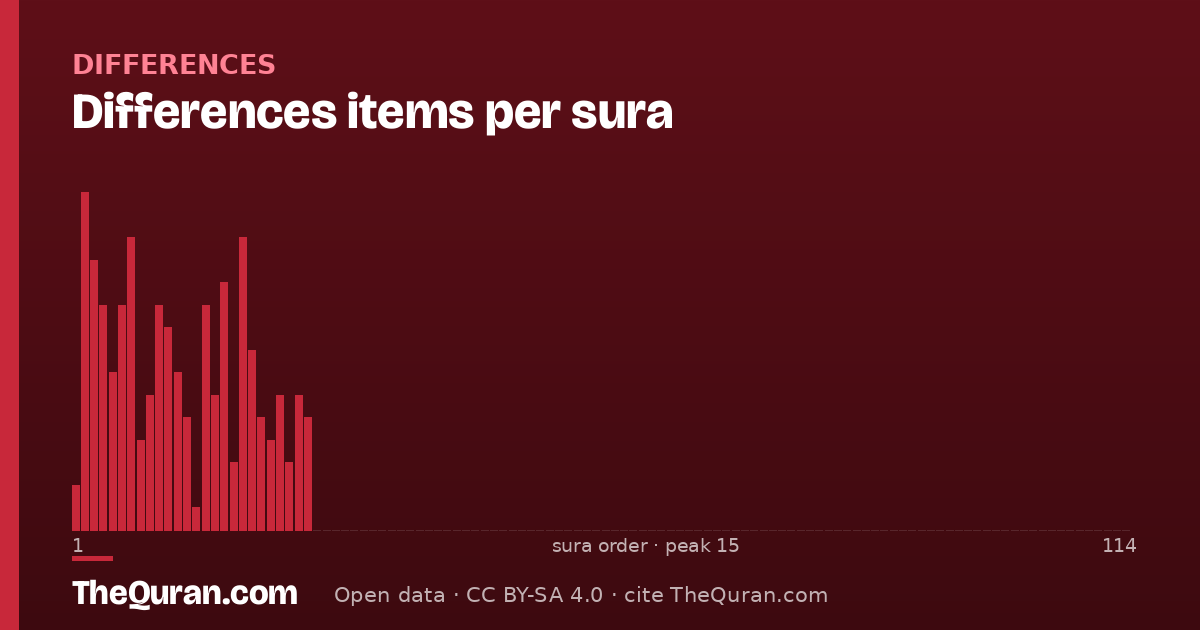
Items per sura

1114sura order · darker = more items · none = blank
8 items · page 1 of 1 Clear
  1. 4:512 verses Historical background Open question Argument This verse accuses “those to whom a portion of the Book has been given” that they “believe in Gibt and Taghut.” According to the Arabic concordance al-Qāmūs al-Muhīt., Gibt means idols or other false deities and Tāghūt means the …
  2. 9:1 Historical background Argument Unlike all other sūras of the Qur’ān, Q 9 does not start with the Basmala, “In the name of the merciful and compassionate God”. According to the Islāmic exegetical sources, omitting the Basmala as a heading in this sūra is due to…
  3. 9:28 Open question Argument The verse describes the mushrikūn (blasphemers, idolaters) as najasun (the unclean, defiled, impure). Some exegetes explain the description najasun to be an abstraction for their insult and contempt. Others say that the reason th…
  4. 9:362 verses Historical background Argument The calendar in the Arabian Peninsula before Islām was based on lunar months. The total days of the Arabian lunar months number 354, which is eleven days less than that of the calendar months. For this reason, the Arabs used to a…
  5. 9:55 Internal contradiction Argument How could wealth and children be instruments of torture in life, according to this verse, while the Qur’ān itself mentions in another verse (Q 18.46), “Wealth and children are an adornment of the life of this world”? Interpreters…
  6. 9:60 Historical background Argument The verse states that part of the donations (alms) should go “to attract the hearts of those who have been inclined (towards Islâm)” (al-Hilali trans.) or “and those whose hearts are reconciled” or “those whose hearts are made to…
  7. 9:79 Open question Argument The verse states that Allah ridicules those who ridicule Muslims. Is portraying Allah as a cynic consistent with Allah’s transcendence? (Compare the comment on Q 3.54, where Allah is described as a deceiver).
  8. 9:972 verses Internal contradiction Open question Argument The sūra accuses the Arabs of being “keener in misbelief and hypocrisy” (verse 97). Then after only two verses it contradicts itself, excluding “some” of the Arabs: “And of the Arabs of the desert are some who believe in God and …