TheQuran.com
Differences Analysis · argument tier

Questions raised about the text

Linguistic, historical, scientific and internal-consistency questions, verse by verse. Each item is an argument, with the sources it cites and a place for the responses.

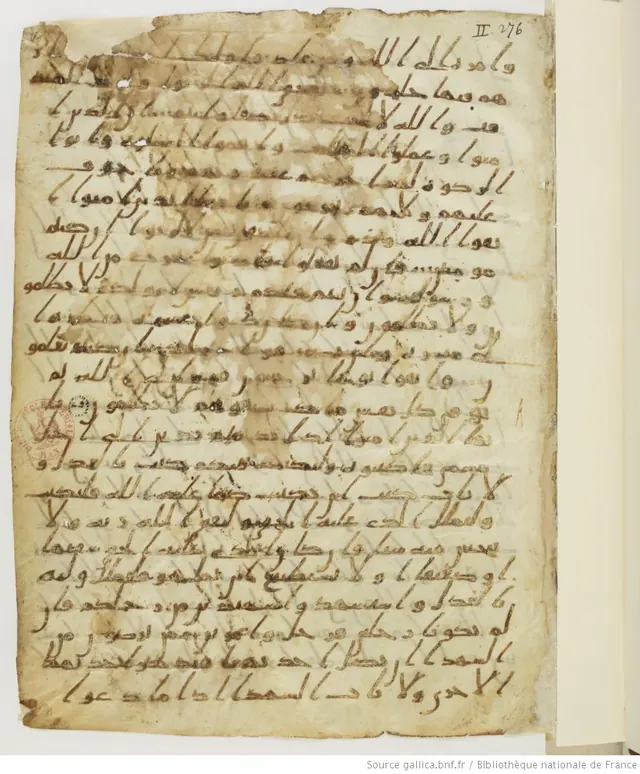
Codex Parisino-petropolitanus, c. late 7th–early 8th century
Codex Parisino-petropolitanus, c. late 7th–early 8th century · credit
items
214201 original · 13 proposed
verses covered
3616% of 6,236
suras
43of 114
cite a source
100%0 cite none
Browse by category

The old site's categories

Each item is filed under one category from the old site's list (its most specific one); the other categories it carries still show as tags.

All category tags

What the questions are about

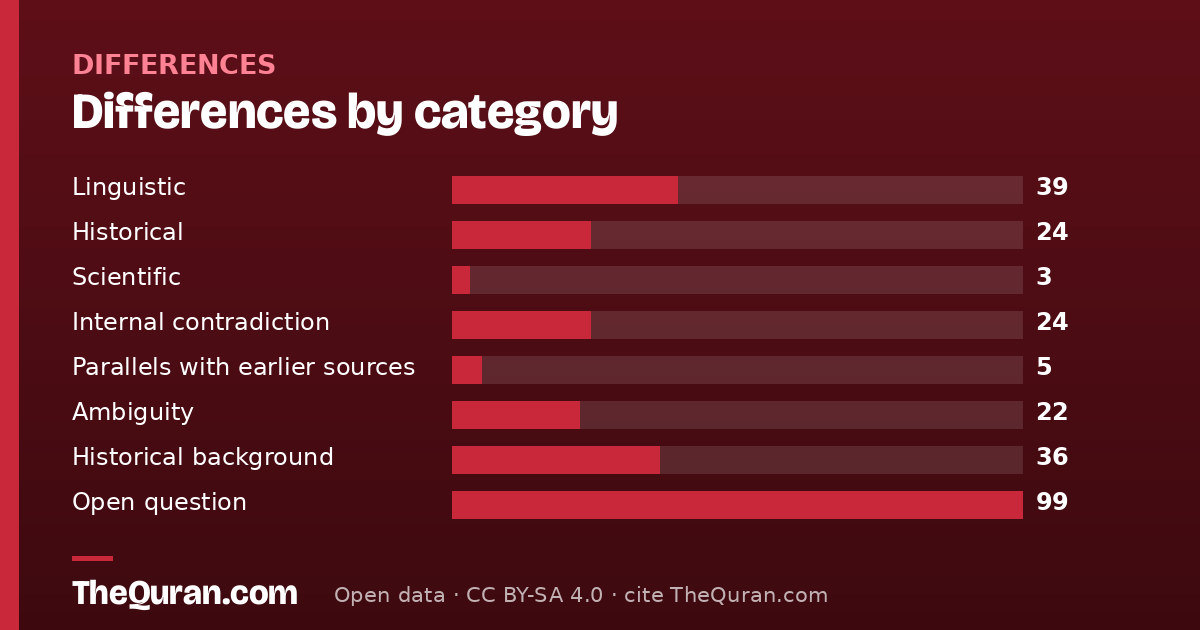
  1. Open question · old label “Question” 105 49%
  2. Linguistic 42 20%
  3. Historical background · old label “Historical Background” 39 18%
  4. Historical 31 14%
  5. Internal contradiction · old label “Quranic Contradiction” 29 14%
  6. Ambiguity 25 12%
  7. Parallels with earlier sources · old label “Copied from other sources” 7 3%
  8. Scientific 4 2%
  9. Numerical 2 1%
  10. Geographical 1 0%

original site proposed · an item can carry more than one category, so the bars sum to more than 214.

Across the Qur'an

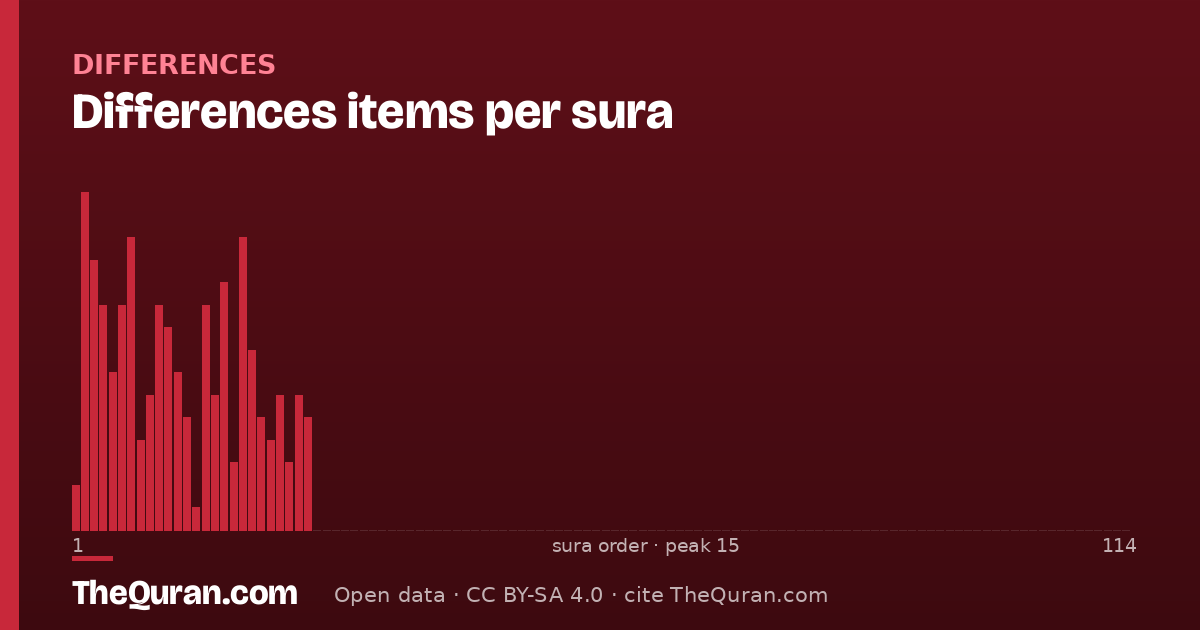
Items per sura

1114sura order · darker = more items · none = blank
12 items · page 1 of 1 Clear
  1. 3:32 verses Historical AmbiguityHistorical background Argument These verses address Muhammad, stating that the book that came down to him “is confirming to what was sent down before of Allah’s books, which he had sent down upon his prophets and messengers.” It is “confirming…what they have t…
  2. 3:7 Internal contradiction Argument This verse states that some of the verses of the Qur’ān are muhkamāt (“decisive”) and others are mutashābihāt (“similar, allegorical, or ambiguous”). The muhkamāt verses are of established meaning, without a need for interpretati…
  3. 3:14 Open question Argument Regarding this verse, most of the scholars said, “Allah has beautified to people the love of desires and things they covet.” Al-Zamakhsharī explains that Allah beautified for people the love of desires and things they covet to te…
  4. 3:353 verses Historical Argument This text tells us of ‘Imrān’s wife, who is Hannah, according to the scholars. When she felt that she was pregnant, she offered what was in her womb as a servant to Allah. However, after she delivered, she discovered that the bab…
  5. 3:424 verses Internal contradiction Argument This verse states that angels brought glad tidings to Mary about the birth of Jesus. But another verse states that only one angel came to her (Q 19.17-21). The scholars ignored this contradiction. However, the commentary Tafsīr a…
  6. 3:54 Open question Argument The closest translation to the Arabic is found in the Pickthall translation: “Allah is the best of schemers” (Q 3.54). The Arabic text is clear in discussing Allah’s fight against evil by stating that Allah answers deception with…
  7. 3:55 Historical Open question Argument Allah is addressing Jesus, telling him that Allah will deliver him from those who rejected him (Jews). Allah also promises Jesus that Allah will make Jesus’ followers (Christians) above the disbelievers and that Allah will judge …
  8. 3:59 Open question Argument This verse demonstrates the similarity of the origin of Jesus and Adam as they were both created without a father. However, the difference is that Adam was created from dust or clay, while Jesus was created by the word of Allah, …
  9. 3:133 Internal contradiction Argument This verse identifies the width of paradise, “a Garden whose width is that (of the whole) of the heavens and of the earth….” (Yusuf Ali trans. Q 3.133) Yet another verse mentions that the width of paradise is the width of one hea…
  10. 3:144 Open question Argument This verse was unknown to the Muslims of Muhammad’s day, even to Muhammad’s friends. The account of its revelation was recorded by the scholar al-Qurtubī: When Muhammad died and the news spread, ‘Umar Ibn al-Khattāb went to Muham…
  11. 3:183 Historical background Argument The reports tell that a group of Jews (including Ka‘b Ibn al-Ashraf, Mālik Ibn al-Siyīf, Wahb Ibn Yahūdhā, Finhās. Ibn‘zūr, and others) entered into a discussion with Muhammad. To prove that Muhammad’s prophecy was true, they req…
  12. 3:192 Open question Argument This verse declares that whoever Allah sends to hell will be humiliated: “Lord! verily, whomsoever Thou hast made to enter the fire, Thou hast disgraced him.” It is well known that the Qur’ān states that everyone will go to hell:…