TheQuran.com
Differences Analysis · argument tier

Questions raised about the text

Linguistic, historical, scientific and internal-consistency questions, verse by verse. Each item is an argument, with the sources it cites and a place for the responses.

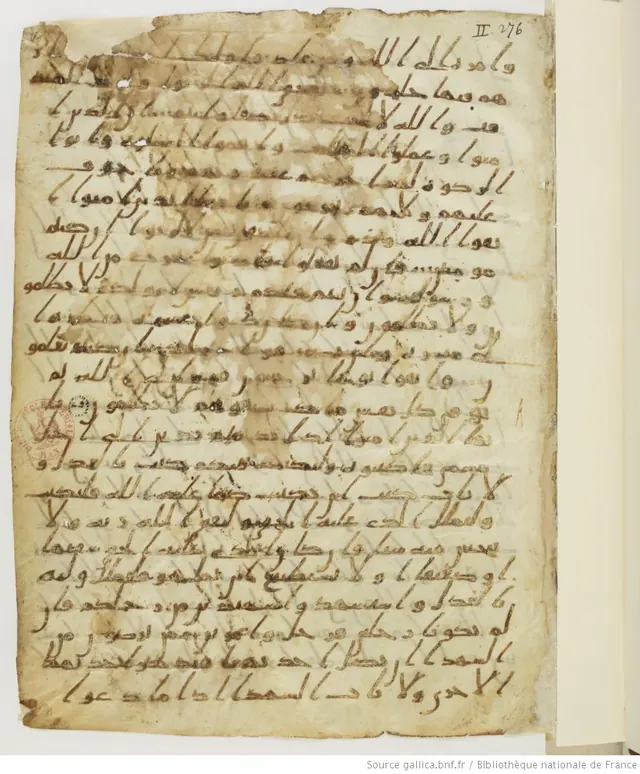
Codex Parisino-petropolitanus, c. late 7th–early 8th century
Codex Parisino-petropolitanus, c. late 7th–early 8th century · credit
items
214201 original · 13 proposed
verses covered
3616% of 6,236
suras
43of 114
cite a source
100%0 cite none
Browse by category

The old site's categories

Each item is filed under one category from the old site's list (its most specific one); the other categories it carries still show as tags.

All category tags

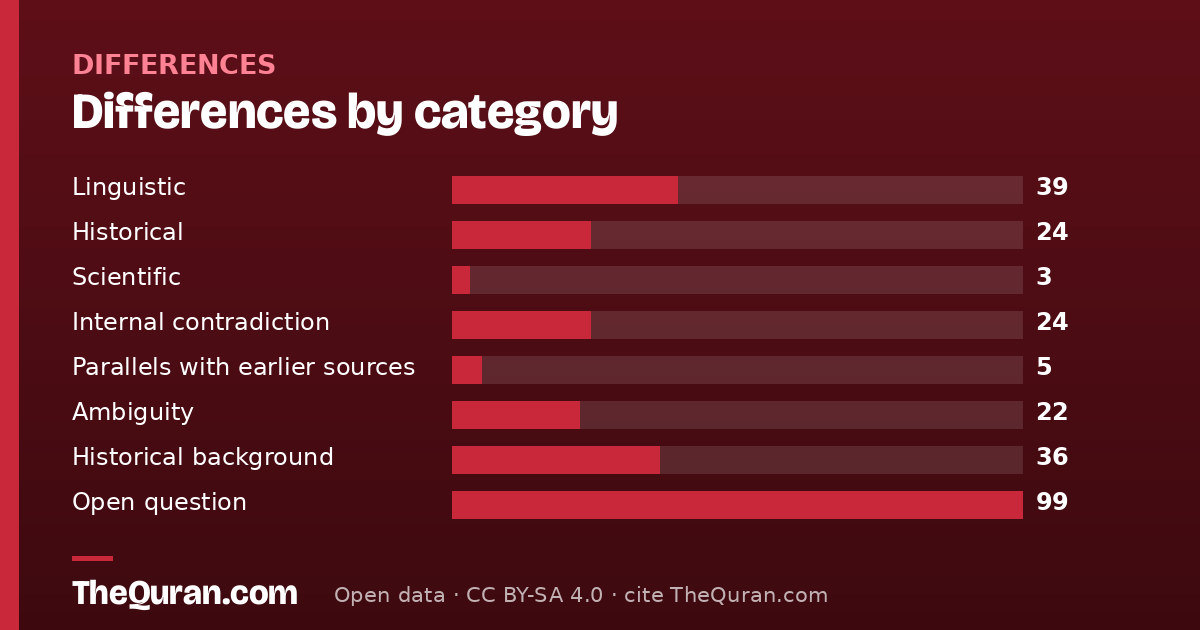
What the questions are about

  1. Open question · old label “Question” 105 49%
  2. Linguistic 42 20%
  3. Historical background · old label “Historical Background” 39 18%
  4. Historical 31 14%
  5. Internal contradiction · old label “Quranic Contradiction” 29 14%
  6. Ambiguity 25 12%
  7. Parallels with earlier sources · old label “Copied from other sources” 7 3%
  8. Scientific 4 2%
  9. Numerical 2 1%
  10. Geographical 1 0%

original site proposed · an item can carry more than one category, so the bars sum to more than 214.

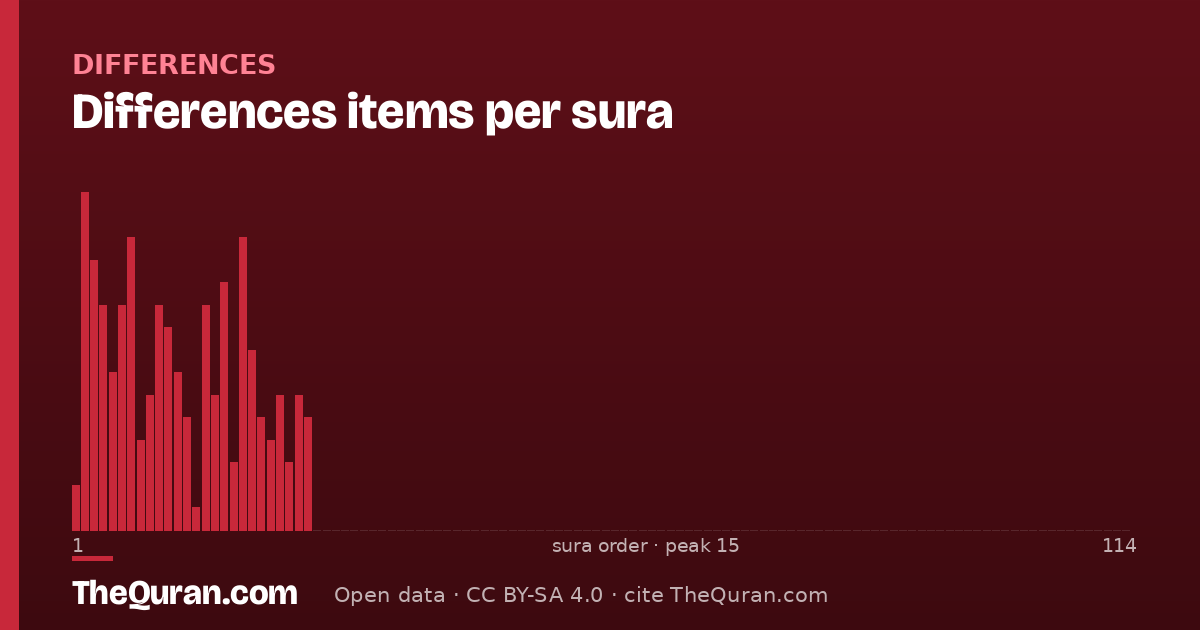
Across the Qur'an

Items per sura

1114sura order · darker = more items · none = blank
7 items · page 1 of 1 Clear
  1. 25:3 Open question Argument The verse presents an argument regarding the rationality of pagan worship. The verse mocks the faith of idolaters in gods who do not create a thing, unlike Allah the creator. Al-Rāzī explains the verse by stating, “They [the idol…
  2. 25:21 Linguistic Argument With no apparent reason and contrary to Arabic orthographic rules, the alif is omitted from the word ‘ataw (“they have exceeded”). (Conversely, the current Arabic Qur’ān also contains words where the alif has been incorrectly add…
  3. 25:25 Linguistic Argument The verse means that the heavens will be split asunder “from” the clouds. The current Arabic Qur’ān has the preposition بـِ, which means “by” or “with” as in “by (or with) the clouds.” In explanation, al-Farrā’ states that the ve…
  4. 25:37 Ambiguity Argument The verse states that the people of Noah “said the apostles were liars'' in the plural, even though the verse is about the people of Noah calling him (in the singular) a liar. Muslim exegetes have attempted to resolve this gramma…
  5. 25:38 Historical Argument The verse mentions “people of ar Rass.” Al-Rass is the name of a well. Regarding the identity of these people, Muslim exegetes offer the following disparate opinions: The people of the town of Thamūd. The people of a town in Yamā…
  6. 25:43 Linguistic Argument The obvious intent of this verse is to criticize infidels for making their passions their god. However, the actual wording in the Arabic language states instead that infidels should be denounced for their passion for their god. F…
  7. 25:44 Ambiguity Argument The verse compares the misbelievers to livestock, stating that they are “like the cattle.” Al-Ţabarī explains that “they are not but like animals that do not understand what is said to them nor comprehend”. On the other hand, Q 1…