TheQuran.com
Differences Analysis · argument tier

Questions raised about the text

Linguistic, historical, scientific and internal-consistency questions, verse by verse. Each item is an argument, with the sources it cites and a place for the responses.

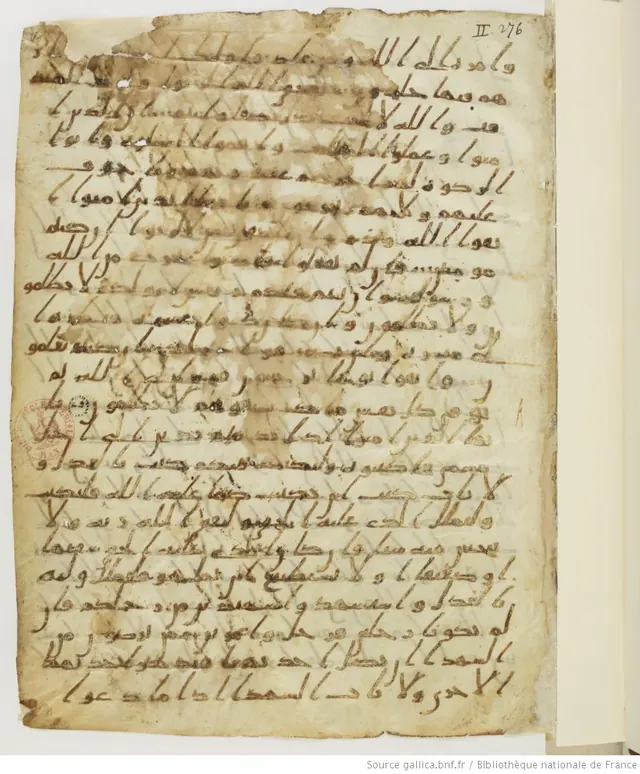
Codex Parisino-petropolitanus, c. late 7th–early 8th century
Codex Parisino-petropolitanus, c. late 7th–early 8th century · credit
items
214201 original · 13 proposed
verses covered
3616% of 6,236
suras
43of 114
cite a source
100%0 cite none
Browse by category

The old site's categories

Each item is filed under one category from the old site's list (its most specific one); the other categories it carries still show as tags.

All category tags

What the questions are about

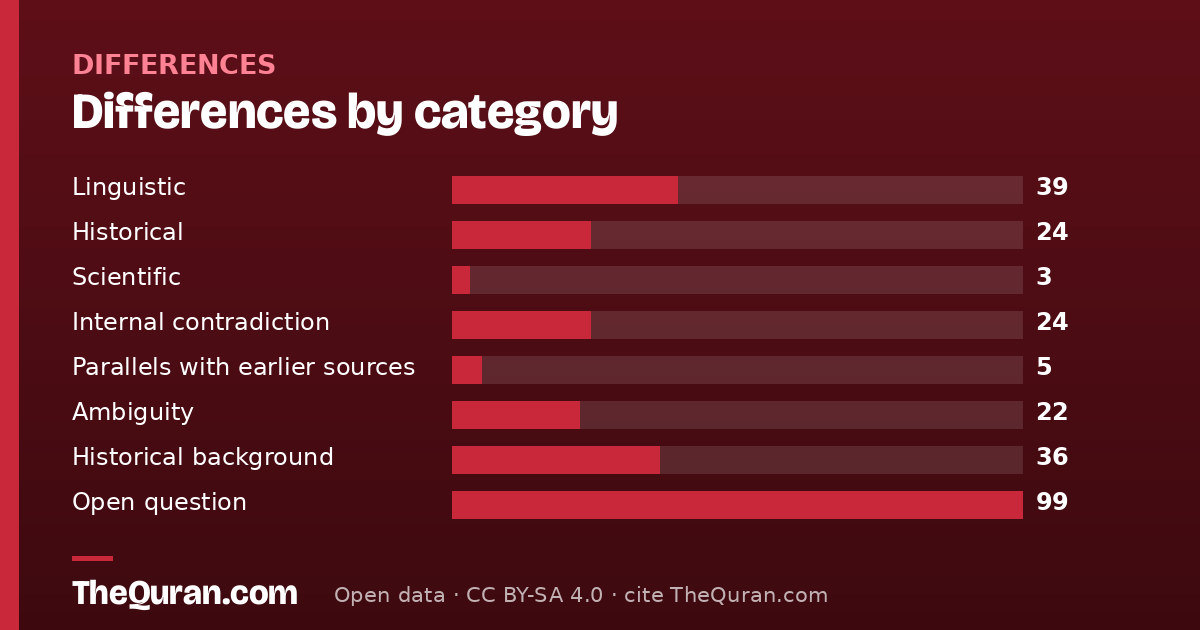
  1. Open question · old label “Question” 105 49%
  2. Linguistic 42 20%
  3. Historical background · old label “Historical Background” 39 18%
  4. Historical 31 14%
  5. Internal contradiction · old label “Quranic Contradiction” 29 14%
  6. Ambiguity 25 12%
  7. Parallels with earlier sources · old label “Copied from other sources” 7 3%
  8. Scientific 4 2%
  9. Numerical 2 1%
  10. Geographical 1 0%

original site proposed · an item can carry more than one category, so the bars sum to more than 214.

Across the Qur'an

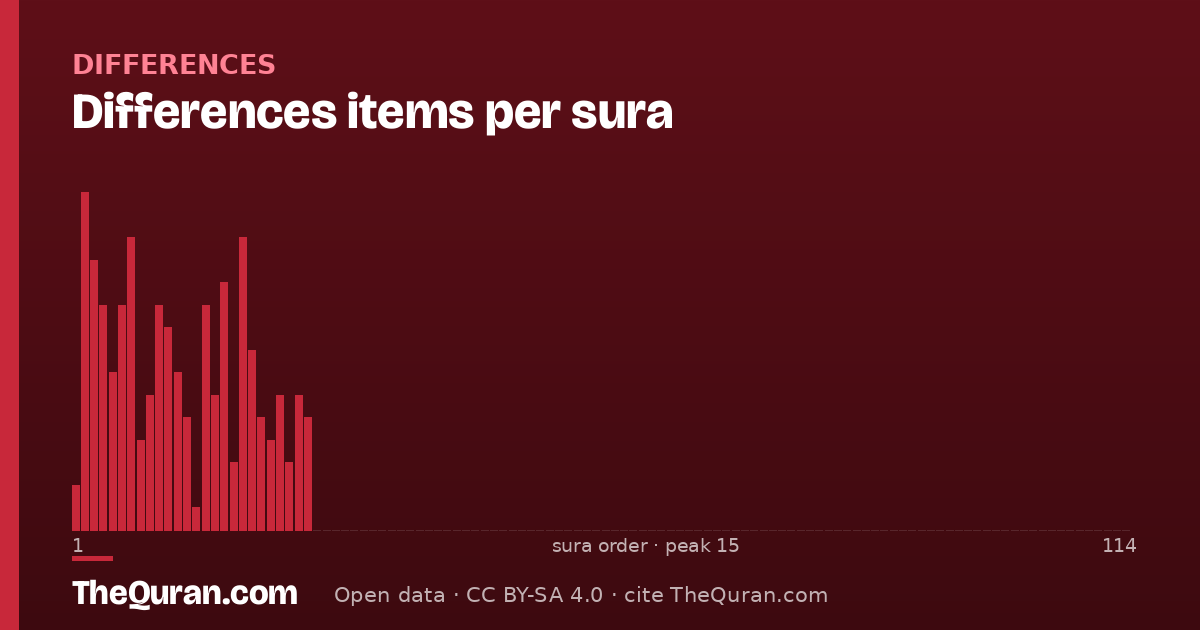
Items per sura

1114sura order · darker = more items · none = blank
18 items · page 1 of 1 Clear
  1. 2:1 Linguistic AmbiguityOpen question Argument The first verse of this sūra begins with individual letters of the alphabet called muqatta‘āt. They are also called fawātih, or “openers,” because they form the opening of multiple sūras. For a discussion about their possible ori…
  2. 2:30 Open question Argument This verse recounts Allah telling the angels that he was planning to create a human being, yet they replied with an implied objection, saying, “‘Wilt Thou place therein one who will do evil therein and shed blood?...’” (Q 2.30). …
  3. 2:313 verses Open question Argument Verses 31–33 are a continuation of the conversation between Allah and the angels concerning the creation of man. These verses state that Allah taught Adam the names of “all of them.” Then Allah asks the angels to repeat these nam…
  4. 2:342 verses Historical background Open question Argument In the Qur’ānic story of Creation, after man is brought into being, Allah tells the angels to lie prostrate before Adam. The angels obey except for Iblīs (the Devil), who refuses because he is too proud. In context, these verses …
  5. 2:35 Historical Ambiguity Argument Allah said to Adam and his wife that they may eat whatever they desire in Eden but adds, “...but do not draw near this tree, or ye will be of the transgressors” (Q 2.35). The use of the definite article this indicates that the he…
  6. 2:552 verses Historical AmbiguityOpen question Argument This verse describes a scene from Moses’ journey with the Israelites in the wilderness after leaving Egypt. According to al-Tabarī’s commentary, prior to this response from Moses (verse 55), he was with a group of Jewish people w…
  7. 2:602 verses Historical Argument The verse informs us that Moses sought to find a water source for his people. The Lord commanded him to strike “the rock” with his staff. The rock split and “and from it burst forth twelve springs” (Q 2.60; Q 7.160). The verse mi…
  8. 2:61 Historical Argument The Old Testament mentions that as the people of Israel were running away from Pharaoh and his soldiers, they arrived at the edge of the sea, where they could go no further. There, in the depth of their despair, they said to Mose…
  9. 2:62 Historical Open question Argument This verse puts the Jews, Christians, Sabaeans, and Muslims into one group (the believers in Allah) and promises them their reward at the end of time (Q 2.62). Another verse, Q 5.69, repeats this promise word for word. However, i…
  10. 2:652 verses Historical Argument This verse talks about the residents of a Jewish village who break the sanctity of the Sabbath. The exegetes explain that these Jews defiled the Sabbath by fishing on that day, “so Allah metamorphosed them into monkeys because of…
  11. 2:972 verses Internal contradiction Open question Argument This verse states that the angel Gabriel (Jibrīl) is the one who transmitted the Qur’ān to Muhammad. However, another Qur’ānic text states that the Holy Spirit is the one who carried out this task: “Say, ‘The Holy Spirit brought …
  12. 2:1062 verses Internal contradiction Open question Argument In the midst of the doctrinal controversy between Muhammad and the Jews in Medina, the Jews noticed that Muhammad was annulling, time and again, rulings that he had enacted. This issue became a subject of their criticism. They sa…
  13. 2:124 Linguistic Argument Within this verse we notice that the reading that would make the word “evildoers'' more proper in Arabic would be in the nominative instead of the accusative case of the noun, i.e., “The evildoers are not within the reach of My P…
  14. 2:158 Historical background Argument This verse continues to address what Muhammad initiated in Q 2.144 when he changed the qibla for Muslims from the Sacred House (Jerusalem) to Mecca. Muhammad reached the conviction that there was no future hope with the Jews of M…
  15. 2:221 Internal contradiction Open question Argument In this verse, the Qur’ān forbids Muslim men and women from marrying “unbelievers”: “Wed not with idolatrous women…And wed not to idolatrous men….” Because the Qur’ān accuses the Christians of being unbelievers (idolaters), marri…
  16. 2:223 Historical background Open question Argument This verse views women as farms (or tilth, meaning “tilled earth or soil”) that men plow. In the commentary by al-Tabarī, al-Suddiy describes a woman as “a farm that can be plowed” by a man. It also allows Muslim men to have sexu…
  17. 2:2293 verses Historical background Open question Argument The Qur’ān justifies, or approves, repeated divorces. According to verse 229, the man is given the right to divorce his wife twice and to remarry her after the first and second divorces. But, if he divorces her a third time, she …
  18. 41:119 verses Internal contradiction Argument added in review Which came first, the earth or the heaven? 41:9–12 describes the earth being created in two days and only then God turning to the heaven (thumma stawā ilā s-samāʾ). 79:27–30 describes the heaven being built and then says “and the earth, after that (baʿda dhālika), He spre…