TheQuran.com
Differences Analysis · argument tier

Questions raised about the text

Linguistic, historical, scientific and internal-consistency questions, verse by verse. Each item is an argument, with the sources it cites and a place for the responses.

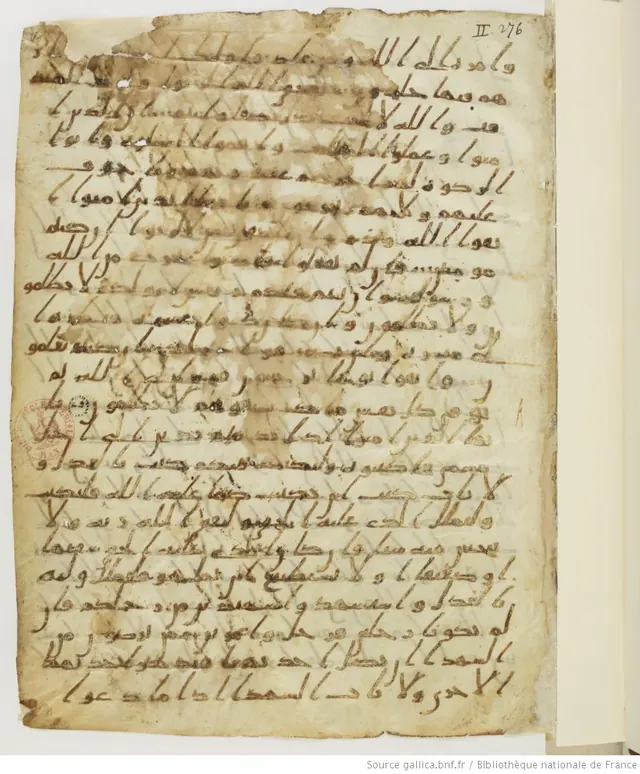
Codex Parisino-petropolitanus, c. late 7th–early 8th century
Codex Parisino-petropolitanus, c. late 7th–early 8th century · credit
items
214201 original · 13 proposed
verses covered
3616% of 6,236
suras
43of 114
cite a source
100%0 cite none
Browse by category

The old site's categories

Each item is filed under one category from the old site's list (its most specific one); the other categories it carries still show as tags.

All category tags

What the questions are about

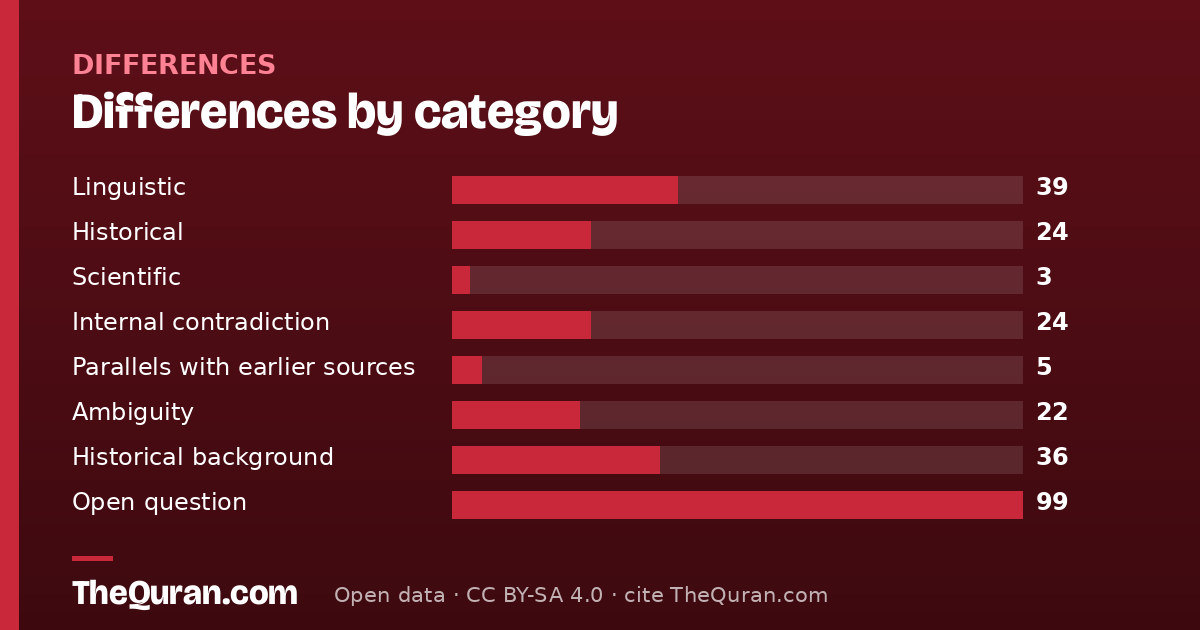
  1. Open question · old label “Question” 105 49%
  2. Linguistic 42 20%
  3. Historical background · old label “Historical Background” 39 18%
  4. Historical 31 14%
  5. Internal contradiction · old label “Quranic Contradiction” 29 14%
  6. Ambiguity 25 12%
  7. Parallels with earlier sources · old label “Copied from other sources” 7 3%
  8. Scientific 4 2%
  9. Numerical 2 1%
  10. Geographical 1 0%

original site proposed · an item can carry more than one category, so the bars sum to more than 214.

Across the Qur'an

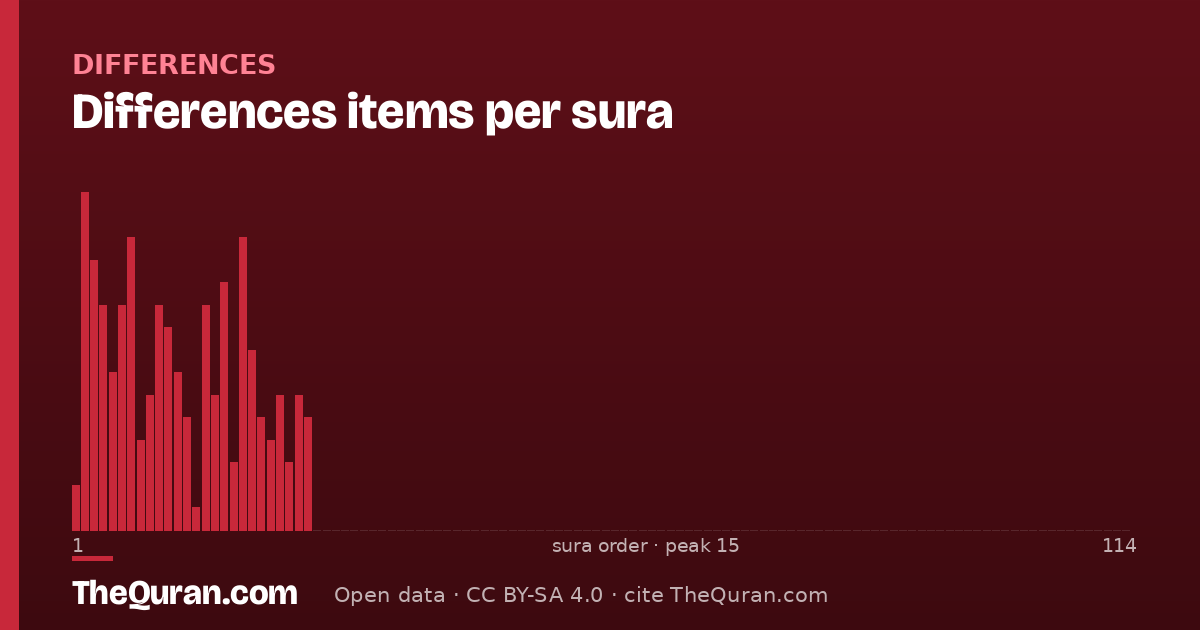
Items per sura

1114sura order · darker = more items · none = blank
8 items · page 1 of 1 Clear
  1. 7:1244 verses Historical Argument added in review Crucifixion in Pharaoh’s Egypt Pharaoh threatens the magicians who believed Moses: “I will cut off your hands and feet on opposite sides, then I will crucify you all” (7:124; also 20:71, “on the trunks of palm trees”, and 26:49). At 12:41 Joseph tells a fellow…
  2. 12:2 Linguistic Open question Argument According to the verse, God announces, “Surely, we have revealed it-- an Arabic Quran-- that you may understand.” The Qur’an repeatedly declares its Arabic calling and outstanding eloquence. Upon reading such verses, one cannot h…
  3. 12:15 Linguistic Argument No obvious predicate concludes the opening clause in this verse: “And when they had gone off with him and agreed to put him in the depths of the pit….” Al-Qurţubī suggests three possible conclusions: The phrase “and we inspired h…
  4. 12:303 verses Open question Argument This text contains the story of the women who mock Zelicha because of her infatuation with Joseph and Zelicha’s response to “their malicious talk.” She invites these women to a banquet in her home, so that they too would be dazzl…
  5. 12:52 Ambiguity Argument Unlike the Palmer English translation, “(said Joseph),” the current Arabic Qur’ān does not remove the ambiguity regarding the speaker in this verse. Islamic commentators offer two opinions regarding the speaker’s identity: The sp…
  6. 12:83 Historical Argument Jacob tells his sons upon their return from Egypt, “It may be that God will give me them all together.” What does the reference “them all” mean here? According to al-Bayďāwī, Jacob is referring to Joseph and Benjamin and their br…
  7. 12:93 Historical Open question Argument It is not clear in the verse how the shirt would return sight to Jacob. The Islamic literature provides an attempt to explain this mystery by stating that the shirt originally belonged to Abraham. It was sent to him from heaven, …
  8. 12:106 Open question Argument In this verse, how could “most of them” believe in Allah and yet continue to worship other gods? ĢanafÏ Muslim exegete Muģammad al-Rāzī attempts to resolve this situation by offering several explanations: The phrase “most of them…