TheQuran.com
Differences Analysis · argument tier

Questions raised about the text

Linguistic, historical, scientific and internal-consistency questions, verse by verse. Each item is an argument, with the sources it cites and a place for the responses.

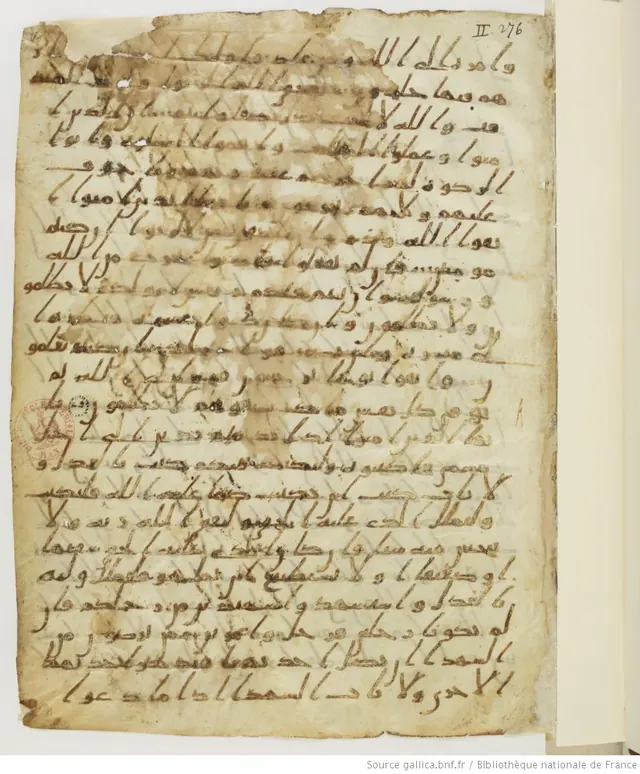
Codex Parisino-petropolitanus, c. late 7th–early 8th century
Codex Parisino-petropolitanus, c. late 7th–early 8th century · credit
items
214201 original · 13 proposed
verses covered
3616% of 6,236
suras
43of 114
cite a source
100%0 cite none
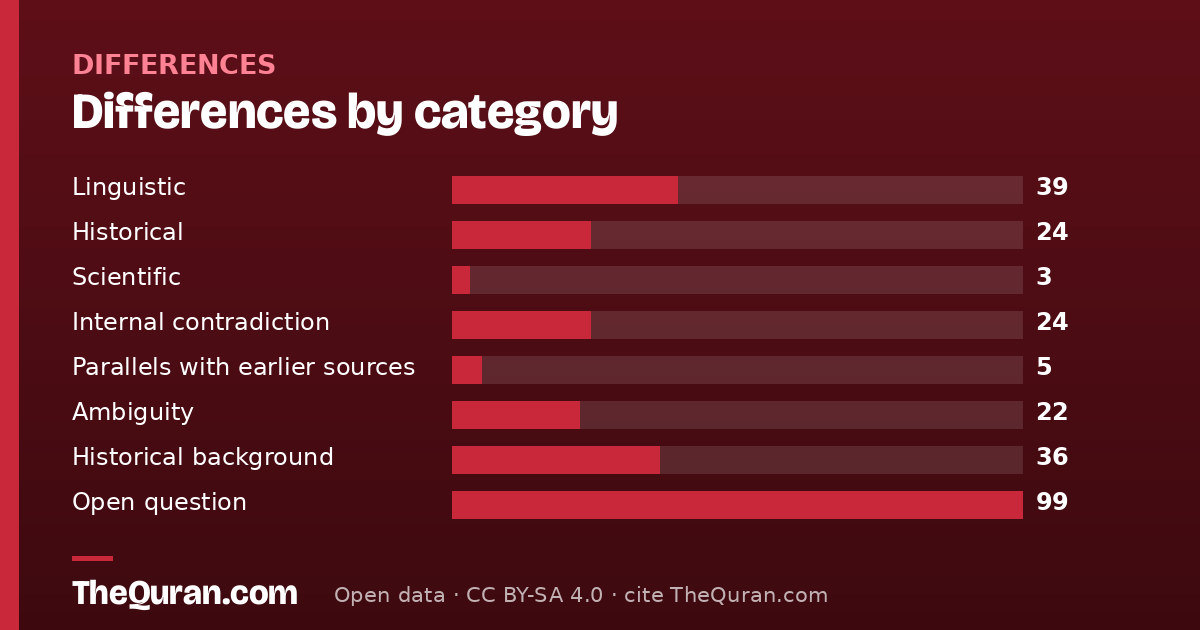
Browse by category

The old site's categories

Each item is filed under one category from the old site's list (its most specific one); the other categories it carries still show as tags.

All category tags

What the questions are about

  1. Open question · old label “Question” 105 49%
  2. Linguistic 42 20%
  3. Historical background · old label “Historical Background” 39 18%
  4. Historical 31 14%
  5. Internal contradiction · old label “Quranic Contradiction” 29 14%
  6. Ambiguity 25 12%
  7. Parallels with earlier sources · old label “Copied from other sources” 7 3%
  8. Scientific 4 2%
  9. Numerical 2 1%
  10. Geographical 1 0%

original site proposed · an item can carry more than one category, so the bars sum to more than 214.

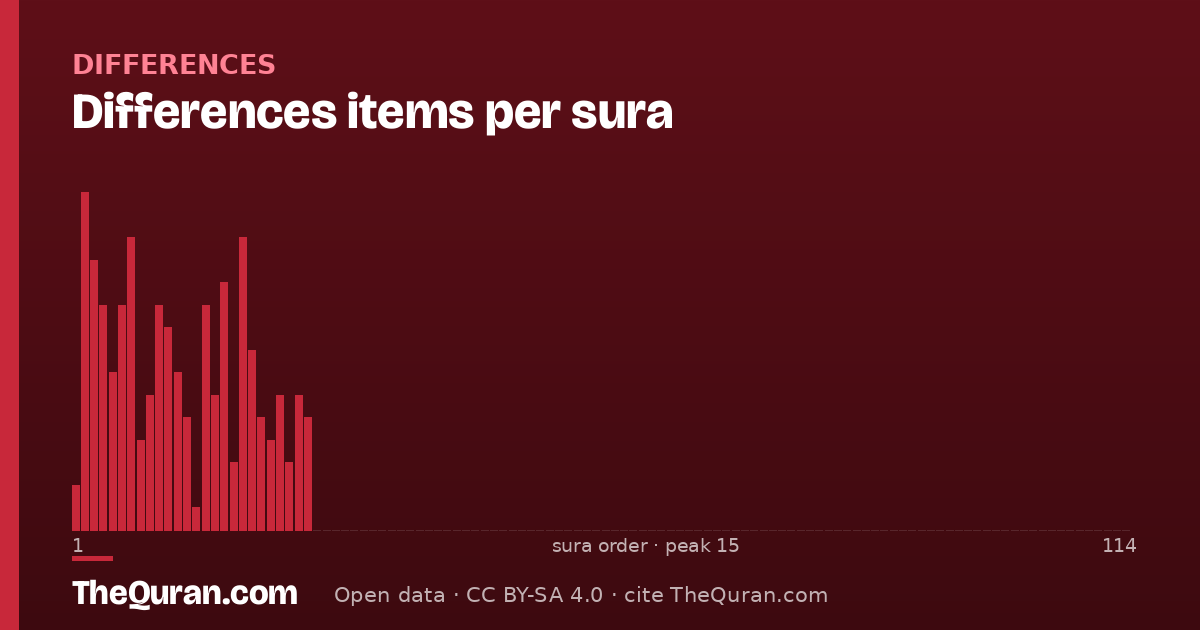
Across the Qur'an

Items per sura

1114sura order · darker = more items · none = blank
214 items · page 6 of 6
  1. 26:2103 verses Open question Argument The text states that the devils did not descend with the Qur’ān. However, in another place the Qur’ān states that Satan interfered in the process of revelation and spoke through Muḥammad. (See the critical analysis of Q 22.52, Qu…
  2. 26:223 Open question Argument The topic of the discussion here is about the diviners or the devils. The verse states that “but most of them are liars,” which suggests that some diviners or devils are truthful.
  3. 26:2275 verses Historical background Open question Argument added in review Verses added after an objection 26:224–226 condemn poets. 26:227 then makes an exception for believing poets. Classical sources say the exception was revealed for the Prophet's own poets, and that 33:35 (naming women alongside men) was revealed after a woman co…
  4. 28:92 verses Parallels with earlier sources Historical Argument added in review Pharaoh’s wife, or Pharaoh’s daughter? 28:9: “Pharaoh’s wife” finds the infant Moses and asks to keep him. 66:11 also praises Pharaoh’s wife. In Exodus 2:5–10 it is Pharaoh’s daughter who finds Moses in the Nile and raises him as her son.
  5. 30:23 verses Linguistic Historical Argument added in review The Romans: defeated, or victorious? 30:2–4 is read ghulibat al-rūm (“the Romans have been defeated … they will be victorious within a few years”). A second reading, ghalabat al-rūm (“the Romans have been victorious”), is reported from Ibn ʿUmar and Abū Saʿīd. The t…
  6. 32:53 verses Internal contradiction Numerical Argument added in review A day of a thousand years, or of fifty thousand? 32:5 speaks of the affair ascending to God “in a day whose measure is a thousand years of what you count”. 70:4 speaks of the angels and the Spirit ascending to Him “in a day whose measure is fifty thousand years”. When Ibn ʿAbbā…
  7. 36:38 Scientific Argument added in review Where does the sun go at night? 36:38: “the sun runs to a resting place (mustaqarr) of its own.” In al-Bukhārī the Prophet explains this verse: at sunset the sun goes and prostrates beneath the Throne, asks permission, and is allowed to rise again; one day it w…
  8. 37:1024 verses Historical Ambiguity Argument added in review Which son was to be sacrificed? 37:101–107 tells of Abraham’s son being offered and ransomed, without a name. Isaac is announced only afterwards (37:112). Al-Ṭabarī reports both views and prefers Isaac “on the plain sense of the revelation”. Ibn Kathīr argues f…
  9. 41:96 verses Internal contradiction Numerical Argument added in review Six days, or eight? Elsewhere creation takes six days (7:54; 50:38). 41:9–12 counts the earth in two days, its mountains and provisions “in four days”, and the seven heavens in two: eight if added. Al-Qurṭubī reads “in four days” as “completing four…
  10. 41:119 verses Internal contradiction Argument added in review Which came first, the earth or the heaven? 41:9–12 describes the earth being created in two days and only then God turning to the heaven (thumma stawā ilā s-samāʾ). 79:27–30 describes the heaven being built and then says “and the earth, after that (baʿda dhālika), He spre…
  11. 46:214 verses Geographical Argument added in review Where were ʿĀd and Iram? 46:21 places the people of ʿĀd “at al-Aḥqāf” (the sand dunes); 89:7 names “Iram of the pillars”. Al-Ṭabarī lists four locations for al-Aḥqāf: a mountain in Syria, a valley between ʿUmān and Mahra, simply “land”, or dunes by the s…
  12. 58:122 verses Open question Argument added in review A charity before speaking to the Prophet 58:12 orders believers to give charity before speaking privately with the Prophet. 58:13 lifts the order. Classical reports say only ʿAlī obeyed (he gave one dinar) before the order was removed.
  13. 69:464 verses Internal contradiction Argument added in review The cut aorta and the false prophet The Qurʾān says that if the Prophet had invented sayings, God would have cut his aorta (al-watīn). It also says God will protect him from the people (5:67). Ḥadīth reports the Prophet saying, as he was dying, that he felt his aor…
  14. 96:12 verses Historical background Open question Argument added in review Which sura came first: 96 or 74? Bukhari has two reports about the first revelation. ʿĀʾisha says it was “Read in the name of your Lord” (96:1). Jābir says it was “O you wrapped up” (74:1).